
-
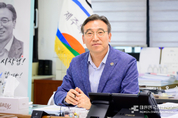
Mayor Oh Soon-moon’s Vision for Seogwipo: "Building a City of Hope through Education, Culture, and Innovation"
“Education and culture are the city's foundational strength and a powerful magnet drawing young people.” Since taking office, Mayor Oh Soon-moon of Seogwipo has consistently championed the vision of ‘Seogwipo City of Hope,’ his eyes brimming with conviction. Amidst the crises of low birth rates, aging populations, and the rapidly changing primary industries, Mayor Oh chose a head-on breakthrough—transforming Seogwipo's very constitution rather than merely maintaining the status quo. From the bold decision to expand the Lee Jung-seop Art Museum tenfold to preparing for the successful hosting of next year's National Sports Festival in Jeju, we met with Mayor Oh Soon-moon, who is redrawing Seogwipo's map, to hear about the future he envisions for Seogwipo and his concrete administrative strategies. [Editor's Note] 1. Upon taking office, you presented the municipal goal of ‘Seogwipo: A City of Hope Opening the Future Through Education and Culture’ and have devoted all efforts to it. What have been the achievements so far? Upon taking office, I presented the municipal vision of ‘Seogwipo: A City of Hope Opening the Future Through Education and Culture’. This is a strategic choice to respond to changes in the population structure and a vulnerable industrial structure. Seogwipo faces the structural challenge of youth population outflow amid low birth rates and aging. Our ultimate goal is to create an urban structure where education, culture, and tourism interconnect—ensuring young people stay, tourists linger, and consumption feeds the local economy. Above all, to create a stable foundation and a nurturing childcare environment for young families, the city operates weekend and holiday childcare support programs at seven locations (two in Jeju City, five in Seogwipo City). It is also expanding specialized programs for elementary, middle, and high school students, along with career lectures and the ‘Dream Project’ for college admission success, all of which are receiving positive responses from parents. Furthermore, building upon the existing Startup Bay, we are newly operating a Startup Town that supports both entrepreneurship and housing, steadily laying the groundwork for young people to put down roots in the region. Alongside this, we have worked to enhance Seogwipo City's appeal by developing it into a cultural tourism city, striving to make it a place people want to visit and stay. Last year, we improved street environments centered on the original downtown area, including Lee Jung-seop Street and Myeongdong-ro, and established permanent nighttime cultural and tourism content like the ‘Geumto Geumto Saeyeon Show’ and the ‘Original Downtown Cultural Festival’. As a result, a structure has been formed where an average of about 2,000 visitors per day are steadily drawn in. 2. What are the city administration goals and projects Seogwipo City is prioritizing most this year? Building on the six major strategies pursued since taking office, we will redouble our efforts this year to create a ‘Seogwipo City of Hope’ where the local economy thrives and citizens' daily lives are filled with vitality, ensuring these changes permeate every corner of the region. First, we will further enhance the permanent downtown programs this year and expand the cultural tourism city project to include townships and villages. - We will operate weekend permanent programs and seasonal events centered around Saeyeon Bridge and the downtown area. Starting with the March Rapeseed Flower International Walking Festival, we will schedule events like the Downtown Cultural Festival, Geumto Geumto Saeyeon Show, Drone Light Show, and Chilseokri Festival seasonally to create stay-and-enjoy content offering fun no matter when visitors come. Furthermore, we will leverage the Lee Jung-seop Street and Myeongdong-ro commercial district revitalization project, which will see 10 billion won invested over five years starting this year, as an opportunity for the downtown commercial district to leap forward again. Beyond existing traditional markets and alley-type shopping districts, we will identify small-scale alley commercial districts that are not large in scale but have high growth potential. We will support them with consumption promotion events and lay the groundwork for their sustained growth. Concurrently, we will diversify tourism products to channel cruise tourists and crew members arriving via Gangjeong Port into the city center. We will enhance hospitality, city guidance, and promotion to translate these visits into consumption and revenue. Furthermore, we will continuously strive to strengthen the competitiveness of primary industries, which form the foundation of our region. We will also do our utmost to ensure citizens feel tangible changes in their daily lives, including the successful implementation of the integrated medical and long-term care system starting in March. 3. The Lee Jung-seop Museum plays a crucial role in revitalizing the Lee Jung-seop Street and Myeongdong-ro commercial districts. How is the museum expansion project progressing? The Lee Jung-seop Museum expansion project is being pursued to resolve structural issues such as the existing museum's limited visitor capacity, insufficient exhibition and storage space, and inadequate amenities. This is not merely an extension but a project to rebuild the museum as a core hub of Seogwipo's cultural policy. After expansion, the total floor area will increase to 5,928㎡, approximately ten times the current size. Exhibition halls will expand more than threefold, and storage facilities will grow over ninefold. This will enable simultaneous operation of special and permanent exhibitions while significantly improving artwork preservation conditions. The total project cost is 36.8 billion won. Approximately 5 billion won has already been invested to complete preliminary procedures, including the demolition of the existing museum and detailed design services. An additional 5 billion won was secured last year, allowing full-scale construction to commence in April. Currently, civil engineering work (excavation and retaining wall construction) is underway. A budget of 15.7 billion won has been secured for this year, and the 2027 project cost of 11.1 billion won will also be reflected in phases. Civil works are scheduled for completion by May of the first half of the year, followed by the completion of the structural framework within the year. Interior and exterior finishing works will then proceed sequentially. Aiming for reopening in August 2027, we will develop it into a complex cultural space combining exhibition, education, and archive functions beyond a simple art museum. It will serve as a representative landmark and a core axis for revitalizing the original downtown area. 4. Following the National Sports Festival for the Disabled in September this year, the National Sports Festival will be held in Jeju in October. What are the preparations and plans for this? This year's National Sports Festival for the Disabled (Sept. 11-16) will be held in Jeju for the first time, and the National Sports Festival (Oct. 16-22) will be held in Jeju for the first time in 12 years. The opening and closing ceremonies will be held at the Jeju World Cup Stadium in Seogwipo, and the Gangchanghak Sports Complex will serve as the main venue. Consequently, a large number of athletes and visitors are expected to visit Seogwipo City. Accordingly, Seogwipo City established a ‘National Sports Festival Preparation Support Task Force’ starting in January 2025. It is closely collaborating with the Jeju Special Self-Governing Province Sports Festival Planning Team to advance preparations. Our city is expanding and renovating 24 venues, including the Seogwipo City Comprehensive Gymnasium, to provide athletes with optimal competition environments. The 3,090-seat Comprehensive Gymnasium will also serve as a venue for the 2027 National Youth Sports Festival and the 2028 National Community Sports Festival following the National Sports Festival. Furthermore, to provide convenience for visitors and athletes coming to Seogwipo City and support a successful hosting, we have organized 14 specialized task forces for each area of preparation and are systematically advancing preparations. The National Sports Festival for the Disabled, being held for the first time in Jeju, precedes the main National Sports Festival to raise social awareness of disabled sports. Accordingly, our city is conducting intensive inspections of: △the status of accommodation facilities, including the presence of disabled-accessible facilities; △the availability of disabled-accessible facilities at major tourist sites; and △the installation of disabled-accessible facilities in public restrooms. Based on the results of these sector-specific surveys, we plan to take seamless measures to supplement disabled-accessible facilities and ensure no inconvenience. Meanwhile, Jeju Special Self-Governing Province is preparing a ‘Digital Games’ unique to Jeju, differentiating itself from other regions. Plans include digital ticket entry, digital medal ceremonies, and robot-assisted Games operations. Digital tickets will be used not only for stadium entry but also for event authentication and regional tourism promotions. In step with this, our city will actively promote the development and promotion of tourism content within our jurisdiction. We plan to host festivals and cultural performances during the Games period, aiming to create a festival-style event rich in attractions. We ask for your keen interest and support for the National Para Games and National Sports Festival being held in Jeju this year. 5. Seogwipo City is a major citrus-producing region. With the duty-free import of American mandarins starting this year, farmers' concerns are growing. What countermeasures are in place? Following the implementation of the Korea-US FTA (Free Trade Agreement), American mandarins became duty-free starting this year. Imports mainly occur from January to May, with over 70% expected to enter the domestic market between March and April. This period overlaps with the peak shipping season for Jeju's own citrus varieties like Hallabong and Cheonhwa-hyang, so it cannot be said there will be no short-term impact. However, I believe the core issue is not simply the increase in imported volume, but rather how stably we manage the domestic citrus supply and demand, and how well we supply high-quality citrus to the market. The expansion of imports of foreign fruits like mandarins is a structural trend. The issue is not limited to mandarins as a single competing fruit. Therefore, rather than focusing solely on price defense, a strategic shift is needed—one centered on quality, branding, and supply management—to solidify the market position of Jeju's late-season citrus varieties. Therefore, I believe it is crucial that we each respond by making the efforts we can from our respective positions. For instance, farmers, as the primary producers, must cultivate high-quality citrus and harvest only fully ripened fruit for shipment. Distributors, including the Agricultural Cooperative and other retailers, need to rigorously sort out non-premium citrus and manage supply and demand. Administratively, it is necessary to promote the support and institutional improvements required for the foundation of high-quality citrus production. Specifically, Seogwipo City will actively promote the excellence of late-season citrus and alleviate farmer concerns through on-site communication. We will also vigorously promote initiatives like the Lunar New Year online campaign and late-season citrus consumption through our online shopping mall, ‘Seogwipo in Jeong’. Furthermore, we will strengthen crackdowns on non-marketable citrus to establish a shipping order centered on fully ripened fruit. 6. Finally, a message for the citizens? In 2026, we will continue to devote our full efforts to stabilizing people's livelihoods and revitalizing local commerce. We will also inject vitality through culture and tourism, and further solidify the competitiveness of primary industries, which form the foundation of our region. Notably, following the National Sports Festival for the Disabled in September, the National Sports Festival will be held in Jeju, centered in Seogwipo, in October. With many athletes and visitors expected to visit Jeju, we must successfully host these events to showcase Seogwipo City's capabilities nationwide and turn this into an opportunity for new leaps and changes. We ask for your active participation and cooperation in demonstrating courteous and mature civic awareness, and in extending warm hospitality to the athletes and visitors. I believe the true measure of administrative success lies in its tangible impact on citizens' daily lives. By responsibly completing the policies we have pursued thus far, we will spare no effort to the very end for the betterment of citizens' lives and the development of Seogwipo City. Thank you. [Korea English Press Reporter Seo Ju-yeon]
- 관리자 기자
- 2026-03-10 14:33
-
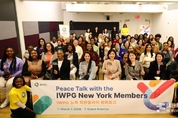
Voices for Peace Resonate in New York: IWPG to Advocate for 'DPCW' International Law at the UN
The International Women's Peace Group (IWPG, President Jeon Na-young) will dispatch a delegation to the 70th session of the Commission on the Status of Women (CSW) at the United Nations Headquarters in New York this March, marking the start of its full-scale international activities. March 8th is the UN's officially designated ‘International Women's Day’, a day to honor women's social, economic, and political contributions and promote gender equality. The UN CSW serves as the central forum for global discussions on gender equality and the advancement of women's rights. The 70th CSW will focus on the key theme of “Ensuring women's and girls' access to justice and promoting fair legal systems.” Aligning with this, IWPG plans to emphasize the role of women in overcoming the legal and structural barriers faced by women and girls worldwide and achieving substantive peace. Comprising representatives including Chairperson Jeon Na-young and branch directors from South Korea and overseas, this delegation will conduct active peace diplomacy both inside and outside UN Headquarters during the two-week session. Key events include co-hosting side events with the African Union (AU) and Türkiye, solidarity events with global NGOs, high-level meetings with government officials and UN ambassadors, and gatherings with New York-based members. Specifically, IWPG plans to express the necessity of establishing the ‘Declaration and Program of Peace and Cessation of War (DPCW)’ as international law during this session and propose sustainable peace-building strategies through women's peace education to the international community. Representative Jeon Na-young stated, “This CSW participation will be a milestone in establishing cooperative relationships with women's ministries and international women's organizations worldwide, ensuring that women-led peace leads to tangible policies and legal codification.” She added, “At a time when anxiety from social conflict and war is greater than ever, we will carry out IWPG's peace activities in New York, delivering comfort and peace.” Meanwhile, IWPG is an international women's NGO registered with the Republic of Korea's Ministry of Gender Equality and Family, the UN Economic and Social Council (ECOSOC), and the Department of Global Communications (DGC). It operates in solidarity with 115 branches across 122 countries and over 900 partner organizations in 68 countries, working toward the goal of ‘realizing sustainable world peace’. [Korea English Press]
- 관리자 기자
- 2026-03-10 13:38
-
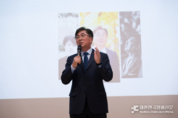
Seong Ki-sun's Book Launch Event ‘Education in Turmoil’...Seeking Hope for Public Education Through Basic, Relationship, Growth (BRG)
On the 6th, the publication celebration for Professor Sung Ki-sun's (Catholic University of Korea, former President of the Korea Institute for Curriculum and Evaluation) book ‘Educational Turmoil’ was held at the Gyeonggi University Teleconvention Center. Sung was the 2022 Democratic Progressive Single Candidate for Gyeonggi Superintendent of Education. The event was a great success, attended by approximately 800 key figures from education, politics, academia, civic groups, and the public. Attendees included Gyeonggi Province Governor Kim Dong-yeon, Bucheon Mayor Cho Yong-ik, former Minister of Education Kim Shin-il, former National Assembly members Kang Min-jung and Yoon Mi-hyang, actor Lee Ki-young, former Teachers' Union Federation Chairman Kim Yong-seo, Gyeonggi Provincial Office of Education Integrated Civil Servants' Labor Union Chairman Lee Sang-hyuk, Gyeonggi Provincial Office of Education General Civil Servants' Labor Union Chairman Kang Dong-in, and Korean Confederation of Trade Unions Gyeonggi Regional Headquarters Standing Vice Chairman Baek Seung-jin. Professor Seong diagnosed the current state of Korean education as a crisis entangled by five types of chaos: ▲ideological ▲ideology ▲neoliberalism ▲system ▲future. He then presented a hopeful solution based on the BRG education model, which asserts that children's true growth is achieved when the foundation is solid (Basic) and relationships of trust (Relationship) are restored. In his congratulatory address at the publication celebration, Gyeonggi Province Governor Kim Dong-yeon stated, stated, “Last year, we witnessed democracy crumbling under illegal martial law and civil unrest, and that unrest continues to this day.” He added, “The roots of this educational turmoil likely harbor structural problems that have been inherent for far longer than the unrest caused by illegal martial law,” expressing his hope that “today's event, alongside Professor Sung, becomes the first step in uprooting the causes of this educational turmoil.” Furthermore, former Minister of Education Kim Shin-il, Professor Sung's mentor, recalled, “Even during his school days, Professor Sung showed an exceptional interest in the school environment, including students and teachers.” He assessed, “Building on that passion, his administrative experience as Director of the Yulgok Institute of Education and Director of the Korea Institute for Curriculum and Evaluation seems to have deepened his expertise.” Professor Park Gu-yong (Department of Philosophy, Chonnam National University), who participated in the book talk, remarked, “Both students and teachers seem to have reached an extreme point of difficulty. The next progressive superintendent must absolutely find new alternatives to this.” He added, “I felt Professor Sung's sincerity in appealing not just to offer answers alone, but to find alternatives together with the educational community.” [대한민국영어신문 박혜선 phs@kedupress.com]
- 관리자 기자
- 2025-12-09 14:30
-
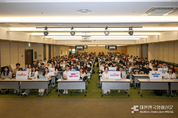
Lotte Scholarship Foundation Provides 300 Job Seekers with 300 Million Won in Scholarships and Employment Training Support
The Lotte Scholarship Foundation (Chairwoman Jang Hye-seon) held the “Shin Kyuk-ho Lotte Scholarship Award Ceremony for Job Seekers” on Tuesday, May 5, at the Lotte Retail Academy in Yeongdeungpo-gu, Seoul, and presented a total of 300 million won in scholarships to 300 job seekers in the media and engineering fields. This year's scholarship recipients will each receive a living expense scholarship of 1 million won, and will also have the opportunity to participate in various job experience education programs to learn about their desired fields and develop their expertise. The education program for scholarship recipients will be conducted over four days and will include lecture-style education such as “employment special lectures” with experts in the media and engineering fields and “conversations with seniors” where they can hear about actual work experiences, as well as a one-day “field trip” where they can visit a broadcasting studio and the research complex at Lotte Central Research Institute. Launched in 2019 for those aspiring to work in the distribution industry, the “Shin Kyuk-ho Lotte Scholarship for Job Seekers” is now in its seventh year. The program aims to nurture diverse talent by setting different job categories each year based on the preferences of the scholarship recipients. In addition to the media and communications field, which began receiving support last year, the foundation has expanded the scope of its scholarship support to include job seekers in science and engineering fields, selecting scholarship recipients from among students who have completed (or are expected to complete) at least five semesters of a four-year university program nationwide. The regional breakdown of the 300 scholarship recipients selected this year (based on school) is as follows: △Seoul 159 △Gyeonggi 24 △Incheon 27 △Gangwon 2 △Gyeongbuk 12 △Gyeongnam 8 △Daegu 4 △Busan 11 △Ulsan 4 △Chungnam 21 △Chungbuk 10 △Jeonbuk 6 △Jeonnam 11 △Jeju 1. This year, in particular, scholarships were awarded exclusively to socially vulnerable groups in need of economic support, including low-income households, single-parent families, grandparent-headed households, foster families, and multicultural families, with the aim of providing practical assistance to job seekers striving toward their dreams despite challenging circumstances. The award ceremony was attended by Jang Hye-seon, Chairperson of the Lotte Scholarship Foundation, and approximately 300 recipients of the 7th batch of scholarships. In her opening remarks, Jang Hye-seon said, “I have been looking forward to this moment for a long time, but I apologize for not being able to greet you all in the best of health today.” She continued, “This year marks the seventh year that our foundation has been supporting job seekers, and I would like to share with you the motivation I have felt personally while helping them.” Chairman Jang said, “As the chairman of the foundation, every time I conduct interviews with job seekers who have applied to the foundation, I am struck by how versatile and talented they are. However, the fact that such capable job seekers are still unable to secure employment is personally very disappointing to me.” She continued, “While helping you is important, what we truly strive for is to walk alongside you with all our hearts. Even if we don't see each other every day or meet often, we believe that even passing by is a connection. Those of us gathered here today are truly a great and precious connection.” Therefore, she urged, “Please keep the name ‘Lotte Scholarship Foundation’ in your hearts and remember the value of ‘virtuous cycle’ that our foundation pursues. No matter where you go or where you find employment, please do not forget these two things and put them into practice in your lives.” Chairman Jang also said, “Our foundation is constantly thinking of various ways to help job seekers every year, and we are changing our methods and programs every year.” In particular, she said, “This year, we decided to provide new support because we believe that science and engineering fields are very important for national development and economic growth.” She concluded, “All members of our foundation are working diligently for your future, so please provide feedback after the program ends for the benefit of the next cohort.” Meanwhile, this year's “Shin Gak-ho Lotte Job Seeker Scholarship” attracted over 1,000 applicants, resulting in a competition ratio of 3.4:1, reflecting the high level of interest among young people in employment. The Lotte Scholarship Foundation plans to continue its social contribution activities by supporting young people's challenges and growth, and discovering and nurturing talent in various fields.
- 관리자 기자
- 2025-08-07 01:19
-

Korean Centers for Disease Control and Prevention: Injured patients account for the largest proportion of hospitalized patients; falls are the main cause
The Korea Disease Control and Prevention Agency (KDCA) will release the results of the Discharge Injury In-depth Survey, conducted to identify the characteristics of patients hospitalized due to injuries, along with the “2023 Discharge Injury Statistics” and related raw data, starting June 30. The Discharge Injury Deep Survey has been conducted since 2005 to provide evidence for the establishment and evaluation of injury prevention and management policies. It investigates the occurrence and epidemiological characteristics of injuries. The survey results are published annually as the “Discharge Injury Statistics,” and raw data is also provided for use in research and policy development. According to the survey results, the total number of hospitalized patients in South Korea in 2023 was 7,878,504, of which 1,230,202 were hospitalized due to injuries, accounting for 15.6% of the total and ranking first among hospitalized patients. Although this represents a 1.9% decrease compared to 10 years ago, it is still higher than the rates for cancer (11.7%) and digestive system diseases (11.3%), highlighting the need for active interest and systematic management in injury prevention. Among all injury patients, males (50.3%) outnumbered females (49.7%), but females (63.6%) accounted for a higher proportion in the age group of 65 years and older. Falls (51.6%) were the main cause of injury, and the hospitalization rate for falls was approximately 1.5 times higher for women (1,350) than for men (891). The next most common injuries were transportation accidents (19.9%) and collisions (11.1%). Compared to 2013, falls and slips increased (from 748 in 2013 to 1,121 in 2023, 49.9% increase) and transportation accidents decreased (729 in 2013 to 433 in 2023, 40.6% decrease). When examining injuries caused by falls and slips by age group, they were more common among men aged 0–54, but among women aged 55 and older. Notably, the hospitalization rate for injuries caused by falls and slips among the elderly aged 75 and older was approximately 15.9 times higher than that of those aged 0–14. When comparing the same gender and age groups, the hospitalization rate for women aged 75 and older (6,389) was 27.5 times higher than that of women aged 0–14 (232). The hospitalization rate for poisoning-related injuries was higher among women (48) than men (36), with a higher proportion of women across all age groups except those aged 65 and older. Across all age groups, intentional self-harm was the primary purpose of poisoning, with 89.2% of cases in the 15-24 age group. However, in the 55-64 age group, the rates of unintentional poisoning (46.9%) and intentional self-harm poisoning (48.5%) were similar, highlighting the need to consider gender and age-specific characteristics in poisoning injury management. When examining the primary substances used for intentional self-harm, neuropsychotropic drugs such as antiepileptic drugs, sedatives, and sleep aids accounted for the highest proportion of poisoning cases across all age groups (47.1–58.0%). The next most common substances were analgesics and anti-inflammatory drugs (24.1–31.1%) among those aged 0–24, gases and volatile substances (17.1–21.9%) among those aged 25–54, and pesticides and herbicides (27.6–41.1%) among those aged 55 and older. The hospitalization rate for intentional self-harm patients by life stage (per 100,000 population) was highest among the elderly (aged 65 and older) at 62, followed by adolescents (aged 13–18) at 56, young adults (aged 19–64) at 34, and children (aged 0–12) at 1. Compared to 2013, the number of adolescents increased sharply (from 30 in 2013 to 56 in 2023, an 86.7% increase) before decreasing slightly in 2023, while the number of elderly people decreased in 2021 but has been increasing again since then, which is worth noting. When examining gender characteristics, female adolescents (92) were 4.0 times more numerous than male adolescents (23), and among the elderly, females (90) were 2.2 times more numerous than males (41). At this point, measures and social attention considering not only age but also gender-specific characteristics are required. The most common location for injury patients was roads and sidewalks (27.7% for males, 23.1% for females), while females had the highest proportion at residential areas (13.6% for males, 27.1% for females), and males had a relatively higher proportion at industrial and construction sites (6.5% for males, 0.5% for females). The average length of hospital stay for injury patients (13 days) was 6 days longer than that for non-injury patients (7 days), and the length of stay increased with age (0–14 years: 5 days; 75 years and older: 17 days). By injury cause, falls (14 days), fire/flame/heat (14 days), and transportation accidents (12 days) were the most common, while by payment source, workers' compensation insurance (23 days), medical aid (17 days), and national health insurance (12 days) were the most common. According to the 2023 discharge injury statistics, injury types and distributions varied by gender and age, indicating that prevention policies require a refined approach reflecting gender and age-specific characteristics. Ji Young-mi, Director of the Disease Control Agency, stated, "The Disease Control Agency conducts injury survey statistics, including in-depth surveys of injuries upon discharge, based on the ‘Act on the Prevention and Management of Injuries.’ Through these efforts, we have established scientific grounds for injury prevention and management policies and developed various injury prevention rules and guidelines that are easily accessible to the public. Going forward, we will continue to analyze the injury characteristics of the population across their life stages using data accumulated through related surveys and actively work to establish effective prevention and management policies based on these findings. In addition, we hope that the academic community will make extensive use of the raw data to further promote research on injury prevention." Meanwhile, as part of its practical efforts to prevent injuries, the Korea Disease Control and Prevention Agency has developed and distributed educational programs on injury prevention for children's experiential activities and exercise and expert training programs for the prevention of falls among the elderly. In April of this year, it distributed safety guidelines for personal mobility devices and is engaged in various other prevention activities. The ‘2023 Discharge Injury Statistics’ can be viewed on the National Injury Information Portal, and the raw data is provided through the National Injury Information Portal website after application and review in accordance with the ‘Regulations on the Disclosure of Raw Data by the Korea Disease Control and Prevention Agency (KDCA) (KDCA Notice No. 124).’ Users can understand the structure of the data and easily utilize the necessary variables for analysis through the “Guidelines for Using Raw Data from the Discharge Injury In-depth Survey.” [News Source: Korea Disease Control and Prevention Agency]
- 관리자 기자
- 2025-07-09 06:22
-

Chungbuk Superintendent Yoon Gun-young explores ways to develop diversity with world-renowned education scholar Prof. Paul Kim
The Chungcheongbuk-do Office of Education announced that on the morning of the 27th, the Chungcheongbuk-do Office of the Superintendent of Education hosted a Future Education Roundtable with Professor Paul Kim, a world-renowned education scholar, Senior Associate Dean at Stanford Graduate School of Education, and an expert in educational technology and digital learning. The meeting was held at the suggestion of the Korean Secondary School Principals' Association, and was organized to share global education innovation trends and to refine the direction of Chungbuk's education policy in response to the challenges of digital transformation and ensuring fair learning opportunities. Choi Eun-sook, President of the Korean Secondary School Principals' Association, and Lee Bum-mo, President of the Chungbuk Secondary School Principals' Association, participated in the event, and questions and in-depth discussions were held on the Chungbuk Provincial Office of Education's ‘Diversity’ platform demonstration and changes in school education in the AI era. After completing elementary and secondary school in Korea and studying computer science in the United States, Professor Paul Kim researched and developed various educational environments using virtual reality while a doctoral student at the University of Southern California, and since 2001, he has served as an associate dean and chief technology officer (CTO) at Stanford Graduate School of Education. In particular, the SMILE education system, an inquiry-based learning solution developed by Professor Kim, was selected as a future innovative education model in a 2016 UN report. “The use of AI and digital devices in education is a major turning point in changing not only the form but also the philosophy of education,” said Prof. Kim. "The balance of personalized learning and emotional empowerment through platforms is key. In the age of AI, platforms need to change from providing answers to helping us find answers." In the discussion that followed, various opinions were exchanged on the importance of the ability to ask questions in the age of AI, the inclusiveness of the Dachaeum platform, and the creation of a digital environment to close the education gap. Based on the insights derived from the meeting, Chungbuk Provincial Office of Education plans to upgrade the Dachaeum platform and enhance the implementation of Chungbuk education policies. “In the age of AI, education should be centered on people, not technology,” said Superintendent Yoon Gun-young. “We will not stop the growth of Chungbuk education, where global vision and field-oriented practice meet.” Meanwhile, the Chungbuk Provincial Office of Education's Hwanghaeum Platform is a digital learning platform that supports students' self-directed learning and reading activities beyond the constraints of time and space, and will be expanded to services for parents from September, and the customized learning support function using artificial intelligence (AI) will also be strengthened. [News source: Chungcheongbuk-do Office of Education]
- 관리자 기자
- 2025-06-27 22:24
-
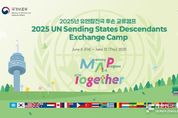
Ministry of Patriots and Veterans Affairs to hold 2025 UN War Veterans' Descendants Exchange Camp
The Ministry of Patriots and Veterans Affairs announced that it will hold a “UN War Veterans' Descendants Exchange Camp” from the 6th to the 12th in Seoul, Busan, Pyeongtaek, and other locations for six nights and seven days to pass on the bonds formed through the Korean War and UN participation to future generations. The UN Participating Nations' Descendants Exchange Camp, which began in 2009 and is now in its 16th year, has expanded its participation this year to include domestic and international university students, with over 50 students from the Ivy League in the United States, descendants of UN veterans, and university students from participating nations and South Korea, totaling 150 participants from 13 countries. The camp will begin with an opening ceremony and will include visits to war memorials and other facilities related to the war, talks with prominent figures, a tour of the Demilitarized Zone (DMZ) for security, and a visit to the Humphreys Military Base. Cultural experiences and academic tasks will also be carried out in groups. On the afternoon of the 6th, the opening ceremony will be held with the participation of Lee Hee-wan, Deputy Minister of Patriots and Veterans Affairs, and camp participants. Following this, renowned domestic chef Choi Hyun-seok will prepare and introduce dishes symbolizing the sacrifice, overcoming, and peace embodied in the Korean War, providing a moment to reflect on the horrors of war and the significance of peace. On the 7th, the participants will visit the War Memorial of Korea to pay tribute to the noble sacrifices of UN veterans, lay flowers and pay respects at the Memorial Wall for the Fallen, and visit the Demilitarized Zone (DMZ) in Paju to tour Dora Observatory and Imjingak. They will then attend the Veterans' Culture Festival “Korea Memorial Music Festa” at Seoul Olympic Park and participate in the UN Uniform Runway fashion show. On the 8th, descendants from various countries participating in cultural experiences in Seoul will visit Camp Humphreys, the U.S. Forces Korea Command, and the 8th U.S. Army Command Headquarters on the 9th, tour the Korea-U.S. Alliance Memorial Tower, and have lunch with soldiers stationed at Camp Humphreys. In the afternoon, they will visit Hanwha Aerospace, Yuhan Corporation, POSCO, and the Korea Veterans Welfare Medical Corporation to share the social and economic value of veterans' affairs through the outstanding veterans' affairs projects and activities of each company and institution under the theme of “The Value of Veterans' Affairs Blooming in the Private Sector.” On the 10th, they will travel to Busan to participate in local craft experiences, followed by an academic forum on the 11th focusing on the globalization of Korean veterans' culture, the development of veterans' medical care, and improvements to veterans' services. They will then visit the UN Peace Memorial Hall to review the history of UN forces' participation in the Korean War and attend a lecture on the theme “UN Veterans and the Republic of Korea.” Following this, the group will conclude all activities with a wreath-laying ceremony and paying respects at the UN Memorial Park, followed by a closing ceremony. Kang Jung-ae, Minister of Patriots and Veterans Affairs, stated, “Through this exchange camp, which will be attended by descendants of Republic of Korea and UN participating countries, we hope that this will be a valuable opportunity to remember and inherit the history of UN participation and the noble sacrifices and dedication of the heroes who participated in the Korean War, and to further develop the bond between the Republic of Korea and UN participating countries into a stronger friendship.” [News Source: Ministry of Patriots and Veterans Affairs]
- 관리자 기자
- 2025-06-09 22:50
-

Korea Disease Control and Prevention Agency to view domestic and overseas health hazard information in one place
The Korea Disease Control and Prevention Agency (KDCA) will launch the Integrated Health Hazard Information System on May 30, which will provide high-quality health hazard information operated by domestic government agencies and international organizations. Recently, with the increase in non-infectious health hazards such as liquid electronic cigarettes and humidifier sterilizers, public interest and demand for information on various types of hazards have been increasing. However, relevant information is scattered across different government ministries, making it difficult for the public to access. In response, the KDCA has established a platform that integrates health hazard information by linking 38 systems from 15 domestic ministries and 13 overseas systems, including the World Health Organization (WHO) and the US Centers for Disease Control and Prevention (CDC). The Health Hazard Integrated Information System provides health hazard information categorized by major systems and topics. To ensure effective information dissemination, it offers visualization features (charts/tables/text) based on Open API and real-time URL linking functionality. In addition, specialized information such as searches by major hazard categories (e.g., climate, poisoning), popular search terms and content, related statistics, and research and educational materials are also provided. The Integrated Health Hazard Information System is accessible on all devices, including PCs, tablets, and mobile devices, and the system will continue to be expanded by identifying additional systems that can be linked. Meanwhile, the Korea Disease Control and Prevention Agency is also preparing legal grounds for surveillance and epidemiological investigations for initial response in cases where a large number of patients occur in groups due to non-infectious health hazards, such as liquid electronic cigarettes and humidifier disinfectants, whose causes are not identified in the early stages of onset. Ji Young-mi, Director of the KDCA, stated, “With the launch of the Integrated Health Hazard Information System, we will ensure that the necessary institutional foundations are established without delay to enable investigations and surveillance not only for infectious diseases but also for unexplained mass outbreaks caused by non-infectious health hazards.” [News Source: KDCA]
- 관리자 기자
- 2025-06-09 22:38
-
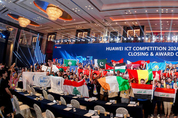
Huawei ICT Competition 2024–2025 Global Finals Conclude: Accelerating AI, Education Innovation, and ICT Talent Development
Shenzhen, China, May 26, 2025 — The closing ceremony and award ceremony for the Huawei ICT Competition 2024–2025 Global Final were successfully held today in Shenzhen. Now in its ninth year, the competition saw participation from over 100 countries and regions, more than 2,000 universities, and over 210,000 students and faculty members, making it the largest event in its history. Following regional preliminaries, 179 teams from 48 countries advanced to the global finals. The competition featured intense competition across three main tracks: Practice, Innovation, and Programming. Eighteen outstanding teams from nine countries—China, Algeria, Brazil, the Philippines, Morocco, Nigeria, Serbia, Tanzania, and Singapore—secured the top honors. The grand prize in the Innovation category went to teams from Bulacan State University in the Philippines, Beijing University of Technology in China, the Faculty of Technology and Science at the University of Kragujevac in Serbia, and the Faculty of Science and Technology at Moulay Ismail University in Morocco. In the ‘Practical’ category – ‘Network Track,’ the Grand Prize was awarded to a joint team from Shenzhen University of Information Technology in China, Federal University of Tocantins in Brazil, Minna Federal University of Technology in Nigeria, Dar es Salaam University of Science and Technology in Tanzania, Dar es Salaam University, and Dodoma University. In the ‘Practical’ category – ‘Cloud Track,’ the award was presented to iACADEMY from the Philippines, Batna 2 University and the Algerian Higher National School of Information Technology from Algeria, Tianjin University of Technology and Education from China, and the Singapore University of Social Sciences. In the ‘Practical’ category – ‘Computing Track,’ the winning team was from Guilin University of Electronic Technology in China, Minna Federal University of Science and Technology in Nigeria, Bejaia University in Algeria, and the Higher National School of Information Technology (SBA) in Algeria, along with the team from Cebu Institute of Technology in the Philippines. The Grand Prize in the Programming category went to the team from Shenzhen Polytechnic University in China. In addition to technical excellence, special awards were also presented to recognize outstanding contributions. The Women in Tech Award was presented to four women's teams from Brazil, Saudi Arabia, Germany, and Kenya. The Green Development Award was awarded to the Ghana team. The Most Valuable Instructor Award was presented to 18 outstanding professors selected from 10 countries, including China, Algeria, Bangladesh, Brazil, Egypt, Indonesia, Iraq, Nigeria, Hungary, and Turkey, in recognition of their contributions to the development of ICT education. Ritchie Peng, Director of Huawei's ICT Strategy and Business Development Department, stated in his opening remarks, “To achieve the goal of ‘learning through competition and innovation through competition,’ we have continuously refined the design of the competition theme.” He added, “The ‘Practical’ category aligns with Huawei's vision for ‘Intelligent World 2030,’ encouraging students to master cloud computing, big data, and AI to drive social development. The ‘Innovation’ category focuses on green development and digital inclusion, motivating participants to solve real-world problems in sectors such as agriculture, healthcare, and education through ICT.” As the digital transformation accelerates globally, the demand for skilled professionals in fields such as AI, big data, and cybersecurity continues to grow. However, a shortage of talent in these core areas is becoming increasingly evident. To address this issue, the Huawei ICT Competition operates various tracks, including practical, innovation, and programming, while also promoting initiatives such as industry-academia collaboration and customized curriculum development. These efforts aim to help students acquire the practical skills they need and grow into next-generation technical talent who will excel in an intelligent and digitalized future society. At this year's competition, Huawei held the AI Accelerating Education Transformation Summit, where experts engaged in in-depth discussions on the pivotal role AI plays in smart education. Additionally, Huawei officially unveiled the AI capabilities of the Huawei ICT Academy Intelligent Platform, providing support to help educators and students use the platform more easily and efficiently. This marks another significant step forward in the development of educational digitalization. For more details about the Huawei ICT Competition, please visit https://www.huawei.com/minisite/ict-competition-2024-2025-global/en/index.html.
- 기자
- 2025-06-09 22:11
-
Jeonnam Office of Education, 2025 College Entrance Examination results: “Lower rankings decreased, higher rankings increased”
On the 9th, the Jeollanam-do Office of Education announced that, based on the analysis results of the 2025 academic year College Scholastic Ability Test (CSAT), the academic performance of Jeollanam-do students is gradually improving compared to the national average. In particular, the percentage of students in the lower performance bracket has decreased significantly, confirming the practical results of policies aimed at improving basic academic skills. The Ministry of Education announced the analysis results of the 2025 CSAT on June 9, about six months earlier than usual. However, without structural improvements to address regional disparities, the gap in scores between metropolitan areas and rural areas and the strong performance of repeat test takers have repeatedly been revealed, causing distrust and concerns about regional education to grow again. According to the actual analysis, the average standard scores of students in large cities were 98.6 in Korean and 98.8 in mathematics, while those in rural areas were 92.9 in Korean and 93.6 in mathematics, indicating that the gap still exists. Jeollanam-do has a high percentage of rural students, with more than 60% of all high schools located in rural areas. Nevertheless, when comparing the college entrance exam scores of the 2021 academic year and the 2025 academic year with the national average, Jeollanam-do showed overall positive changes in academic performance. In Korean language, the lower-performing group decreased by 6.9 percentage points, while the higher-performing group improved by 0.5 percentage points. In mathematics, the lower-performing group decreased by 5.3 percentage points. English also showed a stable trend, with the lower-performing group decreasing by 0.5 percentage points and the higher-performing group improving by 1.0 percentage points. These changes show that the Jeollanam-do Office of Education's efforts to reduce educational disparities and strengthen basic academic skills are bearing fruit. In particular, the stable performance in Korean language and the increase in the percentage of students in the top bracket are interpreted as the result of the Jeollanam-do Office of Education's policy of improving classes with a focus on reading and humanities, which has been a priority. Earlier, Kim Dae-jung, the Jeollanam-do Education Supervisor, officially requested improvements to the method of disclosing college entrance exam analysis data at the National Association of Provincial Education Supervisors' Conference on March 27, stating that the current method could exacerbate educational inequality between regions. Kim Dae-jung emphasized, “The current method of disclosing college entrance exam analysis data causes relative deprivation and anxiety among students and parents in rural areas with insufficient educational infrastructure, which could lead to regional population decline. The current ranking-centric disclosure method must be improved.” [News Source: Jeollanam-do Education Office]
- 관리자 기자
- 2025-06-09 21:52

-
 Medical · Health
The Ministry of Health and Welfare plans to train an average of 668 doctors annually to work in essential public health services in local areas over the next five years, starting in 2027.
Medical · Health
The Ministry of Health and Welfare plans to train an average of 668 doctors annually to work in essential public health services in local areas over the next five years, starting in 2027.
-
 IT · Science
17 domestic humanoids gather at DDP, and Seoul City hosts the 'Seoul AI Festival'
IT · Science
17 domestic humanoids gather at DDP, and Seoul City hosts the 'Seoul AI Festival'
-
 Entertainment · Broadcasting
[SBS My Little Old Boy] Moon Chae-won, to Seo Jang-hoon, who has 4 trillion won(?), says, “Hey, just give me 1 trillion won~” cutely... What will Seo Jang-hoon say?
Entertainment · Broadcasting
[SBS My Little Old Boy] Moon Chae-won, to Seo Jang-hoon, who has 4 trillion won(?), says, “Hey, just give me 1 trillion won~” cutely... What will Seo Jang-hoon say?
-
 Education · Society
Jeju RISE: Sharing the Results of "Industry-Academic Cooperation"
Education · Society
Jeju RISE: Sharing the Results of "Industry-Academic Cooperation"
-
 Education · Society
Goseong County's Dinosaur Land Shopping Mall Wins Consumer-Friendly Brand Award at the 2026 Korea Consumer Awards for 9 Consecutive Years
Education · Society
Goseong County's Dinosaur Land Shopping Mall Wins Consumer-Friendly Brand Award at the 2026 Korea Consumer Awards for 9 Consecutive Years
-
 Politics · Economy
President Lee Jae-myung: "Price stabilization is urgent... Actively developing and implementing policies to ease the burden on people's livelihoods."
Politics · Economy
President Lee Jae-myung: "Price stabilization is urgent... Actively developing and implementing policies to ease the burden on people's livelihoods."
-
 Politics · Economy
President Lee Jae-myung awards the Samjeonggeom sword to a newly promoted brigadier general.
Politics · Economy
President Lee Jae-myung awards the Samjeonggeom sword to a newly promoted brigadier general.
-
 Entertainment · Broadcasting
Fair Play Menarini International Award, 29th Award Ceremony marked by waves of emotion
Entertainment · Broadcasting
Fair Play Menarini International Award, 29th Award Ceremony marked by waves of emotion
-
 Entertainment · Broadcasting
The Rose, the first Korean band to perform at Coachella, confirms Seoul concert on August 30 for “Once Upon a WRLD”
Entertainment · Broadcasting
The Rose, the first Korean band to perform at Coachella, confirms Seoul concert on August 30 for “Once Upon a WRLD”
-
 Culture · Events
Incheon Port Authority kicks off the 6th Incheon International Marine Forum in Songdo, Incheon, to look into the future of the global marine industry
Culture · Events
Incheon Port Authority kicks off the 6th Incheon International Marine Forum in Songdo, Incheon, to look into the future of the global marine industry


-
2026-03-29 08:55
CEO Yoo Jeong-geol – The 'Last Puzzle' of Medical School Admission is Literacy: The Victory of Intellect Overcoming Skill
-
2026-03-22 20:54
"Peace Begins in Life"… IWPG Successfully Concludes 'Only Peace Conference' in Busan
-
2026-03-11 23:52
The Ministry of Health and Welfare plans to train an average of 668 doctors annually to work in essential public health services in local areas over the next five years, starting in 2027.
-
2026-03-11 23:50
17 domestic humanoids gather at DDP, and Seoul City hosts the 'Seoul AI Festival'
-
2026-03-11 23:47
[SBS My Little Old Boy] Moon Chae-won, to Seo Jang-hoon, who has 4 trillion won(?), says, “Hey, just give me 1 trillion won~” cutely... What will Seo Jang-hoon say?

주소 : 서울특별시 강남구 테헤란로83길 18 4층 // 경기도 구리시 건원대로 36 화성골드프라자 902-1-9
등록번호: 경기,아54214 | 등록일 : 2024-10-08 | 발행일자 : 2024-10-08 | 발행인 : 조정인 | 편집인 : 조정인 | 전화번호 : 070-4079-2579 | 이메일 : eduladder@naver.com
Copyright @대한민국영어신문 All rights reserved.

UPDATE: 2026년 03월 29일 08시 55분