
-
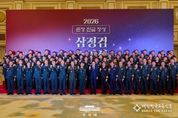
President Lee Jae-myung awards the Samjeonggeom sword to a newly promoted brigadier general.
▲ Samjeonggeom Award Ceremony for Brigadier General Promotion (Blue House) [Republic of Korea Education Newspaper] President Lee Jae-myung attended the '26 Brigadier General Promotion Samjeonggeom Award Ceremony held at the Blue House Guest House this afternoon and awarded the Samjeonggeom to a total of 77 Brigadier General Promotions. Attending today's ceremony were Brigadier General Park Jeong-hoon, who investigated the 'Marine Corps Chae's death on duty' and resisted undue external pressure, and Brigadier General Kim Moon-sang, who refused to deploy martial law helicopters. In his remarks, the president urged everyone to faithfully fulfill their original mission of protecting the country and its people with a great sense of responsibility and mission. He also emphasized that the military must be reborn as an "army for the people" that enjoys the people's infinite trust, and that it must take the lead in restoring the military's tarnished reputation by firmly establishing its duty of political neutrality. The president also emphasized that the most certain peace means a state without the need for war, and that we must always be prepared to win overwhelmingly. He urged us to build a Republic of Korea that is unrivaled and open the path to peace through this. He then emphasized that South Korea is a military power ranked 5th in the world in terms of military power, and urged the newly promoted soldiers to develop a sense of self-reliance and the determination to defend their country with their own strength, without relying on anyone else. Lastly, he emphasized that he would actively lead defense reforms, such as the reorganization of a smart, elite force, based on the valuable experience and leadership of the promoted officers, who are assets of the military, while also commanding with a warm heart and cool-headed reasoning to boost the morale of junior officers and soldiers. In the group photo that followed, President Lee and the newly promoted soldiers clenched their fists and shouted "Fighting!" President Lee then shook hands with each of the newly promoted soldiers standing nearby, offering his congratulations. He even said, "Special congratulations," to Brigadier General Park Jeong-hoon. The newly promoted soldiers responded with a collective fist pump and a "Thank you." [News Source: Policy Briefing]
- 관리자 기자
- 2026-03-11 23:40
-
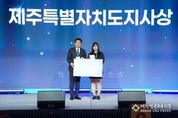
Jeju RISE: Sharing the Results of "Industry-Academic Cooperation"
Jeju Island discussed key achievements and future plans at the 2025 Jeju RISE Project Performance Forum. ▲ 2025 Jeju RISE Achievement Forum Opening Ceremony [Republic of Korea Education Newspaper] Jeju Special Self-Governing Province held the '2025 Jeju RISE Project Achievement Forum' at the Jeju Halla Convention Center on the afternoon of the 26th. This event was designed to share the first year's achievements of the Jeju Regional Innovation Centered University Support System (RISE) project with Jeju residents and to enhance the execution of the cooperative system between the region, universities, and industry. Governor Oh Young-hoon, Central RISE Chairman Kim Heon-young, Local Era Committee 5-pole 3 Special Committee Chairman Lee Byeong-heon, as well as officials from three universities in the province (Jeju National University, Jeju Halla University, and Jeju Tourism College), related organizations, students, and residents of the province attended the event, which was attended by approximately 300 people. At the opening ceremony, university students who participated in the RISE project presented a pre-event performance, and the participating students served as co-hosts with an artificial intelligence (AI) announcer to review the achievements and challenges of the past year from a youth perspective. In particular, Kim Heon-young, the chairman of the Central RISE Committee who contributed to the design of the Jeju-type RISE model, was selected as an honorary citizen of Jeju and received an honorary citizenship certificate. Governor Oh Young-hoon shared the key achievements of Jeju RISE's runcation, AI convergence course, and regional linkage program over the past year, and pledged active support at the provincial level to ensure that the Jeju RISE project becomes a key driving force for regional innovation and future new industries by 2026. Governor Oh emphasized, “The RISE project, which creates a virtuous cycle where talent development leads to improved corporate competitiveness and entrepreneurship, is one of the projects that Jeju Island excels at in Korea,” and “The provincial government will provide more active support so that Jeju RISE can become a project that leads regional innovation and new future industries.” The forum was held in the following order: keynote speech, performance sharing session, and policy discussion session. In his keynote speech, Chairman Lee Byeong-heon emphasized the role of universities as a key driving force in the local era under the theme of “5-pole, 3-special balanced growth strategy and regional talent cultivation plan,” and Chairman Kim Heon-young emphasized the importance of a regional industry-academia cooperation model through regional collaboration under the theme of “Super-wide area RISE and industry-academia cooperation.” At the performance sharing session, excellent cases were introduced, including △Establishment of a customized talent development model through industry-academia cooperation, △K-Food learning trip (Learn-cation) expansion program, △Jeju-Amazon Web Services (AWS) Global Space Bootcamp, △Establishment of Jeju RISE-linked life-integrated adult-friendly open lifelong learning university, △Operation of the new regional Suneul-eum Neulbom School program, and △Jeju-style regional value creation innovation model. The policy discussion was moderated by Professor Kim In-hwan of Seoul National University's Graduate School of Environmental Studies, and seven panelists discussed the major achievements and future plans of the RISE project. Over the past year, Jeju Island has implemented a unique model through the RISE project, concretizing specialized projects linked to local industries. In particular, programs such as runcation, AI convergence education, and regional linkage programs have achieved tangible results. Looking at the main achievements, the 'Runcation Program', which allows people to experience and interact with Jeju's nature and industrial sites, received a great response, with 3,473 people participating in 91 programs from 321 domestic and foreign organizations. A total of 5,124 people participated in the 'Convergence Education Program' encompassing new industries, tourism, and the primary and sixth industries, and achieved tangible results, leading to the creation of 23 new businesses. [News Source: Jeju Island]
- 관리자 기자
- 2026-03-11 23:47
-

17 domestic humanoids gather at DDP, and Seoul City hosts the 'Seoul AI Festival'
Held at DDP from February 28th to March 1st… "Physical AI: Feel It with Your Body" ▲ Seoul AI Festival 2026 Poster [Korea Education Newspaper] Seventeen domestic humanoid robots capable of walking, moving their arms, and understanding human speech will gather at Dongdaemun Design Plaza (DDP). The Seoul Metropolitan Government announced that it will host the "Seoul AI Festival 2026" at DDP Art Hall 1 for two days, from February 28 to March 1. This event, themed “AI spoke to me – Physical AI in everyday life that you can feel with your body,” is a participatory festival designed to allow citizens to directly experience how artificial intelligence is being implemented as “physical AI” technology that goes beyond software and has tangible forms such as robots, devices, and wearables. The "Seoul AI Festival 2026" is hosted by the Seoul Metropolitan Government and organized by the Seoul AI Foundation. It is sponsored and supported by the Korea Robot Industry Advancement Institute and "Geekble," a science and engineering YouTube channel with 1.2 million subscribers. This year, the festival has expanded participation for children and families, taking place over the weekend before the start of the school year. The festival will feature nine zones, three more than last year. ▲ It consists of the 'AI Gallery' that exhibits the winning works of the citizen contest, ▲ 'AI Seoul Inside' that introduces Seoul City's AI policies and achievements, ▲ 'AI Flexpot' where family competitions are held, ▲ 'Humanoid Robot Zone', 'AI Life Showroom', 'Odd Science Zone', 'AI Technology Experience Zone', and 'AI Fun Spot' where you can experience physical AI in everyday life, and ▲ 'AI Odyssey' where lectures and discussions are held by representatives of domestic listed robot companies. A highlight of this year's festival is the newly established "Humanoid Robot Zone." The fully autonomous, agile robot "Uchibot" will be unveiled to the public for the first time in Korea at this event, along with a variety of humanoid and wearable robots, including the AI Worker, NAMY, and the Angelsuit H10. Some robots demonstrate real-world behaviors, such as autonomous walking, object handling, and wearable walking assistance. Visitors don't simply "see" the technology; they can experience its movements up close and interact with the robots. The focus is on "experience" rather than technical explanations, allowing people of all ages to naturally connect with the robots. The AI Technology Experience Zone and AI Life Showroom offer hands-on experience with life-related technologies like AI care robots, voice-recognition smart glasses, AI-based health diagnostic solutions, and autonomous driving service robots. Beyond simple demonstrations, the focus is on real-world usage, demonstrating the practical applicability of physical AI. We also run the "Odd Science Zone," a collaboration with science and engineering influencer Geekble, which boasts 1.2 million subscribers. This interactive exhibit, featuring AI-powered waste sorting machines, AI security robots, and IoT server access points, provides intuitive explanations of scientific principles. On-site docents provide explanations for each piece to help children and young visitors understand the exhibits, and the exhibits are designed to allow them to enjoy science as a game. The stage program is also diverse. On February 28th, Angel Robotics CEO Nammin Cho will give a lecture on "Physical AI," followed by a discussion with representatives from domestic robotics companies and a lecture by Geekble's Sudragon on March 1st. The Seoul AI Golden Bell and contest awards ceremony will also be held over two days. Pre-registration is available on the Seoul AI Festival official website until February 27th, and on-site registration is also available. A competition for families will also be held, continuing from last year. The AI 100-Day Writing and Drawing Contest will be held for families with children aged 7 to 12, using AI tools to write and draw. The AI Robot Family Competition selects winners by having families with children under the age of 10 assemble robot kits and complete mission challenges. Pre-registration will be open until 4:00 PM on February 25th, with 50 teams per round on a first-come, first-served basis. Selection results will be announced at 6:00 PM on the same day. Pre-registration for the event is available on the official website until February 27th, and on-site registration is also available. Kim Man-ki, Chairman of the Seoul AI Foundation, said, “AI technology has reached a stage where it is spreading beyond laboratories and industrial sites into the daily lives of citizens,” and added, “The Seoul AI Festival will become an experiential venue where Seoul citizens can directly see, touch, and experience Physical AI through experiential programs centered around Physical AI.” Kang Ok-hyun, director of the Seoul Metropolitan Government's Digital City Bureau, said, "You will be able to see on-site how robots and AI solve everyday problems," and added, "Through this public festival that combines experience and education, we will lay the foundation for Seoul to leap forward as a leading city in physical AI." [News Source: Seoul Metropolitan Government]
- 관리자 기자
- 2026-03-11 23:50
-
 Medical · Health
The Ministry of Health and Welfare plans to train an average of 668 doctors annually to work in essential public health services in local areas over the next five years, starting in 2027.
Medical · Health
The Ministry of Health and Welfare plans to train an average of 668 doctors annually to work in essential public health services in local areas over the next five years, starting in 2027.
-
 IT · Science
17 domestic humanoids gather at DDP, and Seoul City hosts the 'Seoul AI Festival'
IT · Science
17 domestic humanoids gather at DDP, and Seoul City hosts the 'Seoul AI Festival'
-
 Entertainment · Broadcasting
[SBS My Little Old Boy] Moon Chae-won, to Seo Jang-hoon, who has 4 trillion won(?), says, “Hey, just give me 1 trillion won~” cutely... What will Seo Jang-hoon say?
Entertainment · Broadcasting
[SBS My Little Old Boy] Moon Chae-won, to Seo Jang-hoon, who has 4 trillion won(?), says, “Hey, just give me 1 trillion won~” cutely... What will Seo Jang-hoon say?
-
 Education · Society
Jeju RISE: Sharing the Results of "Industry-Academic Cooperation"
Education · Society
Jeju RISE: Sharing the Results of "Industry-Academic Cooperation"
-
 Education · Society
Goseong County's Dinosaur Land Shopping Mall Wins Consumer-Friendly Brand Award at the 2026 Korea Consumer Awards for 9 Consecutive Years
Education · Society
Goseong County's Dinosaur Land Shopping Mall Wins Consumer-Friendly Brand Award at the 2026 Korea Consumer Awards for 9 Consecutive Years
-
 Politics · Economy
President Lee Jae-myung: "Price stabilization is urgent... Actively developing and implementing policies to ease the burden on people's livelihoods."
Politics · Economy
President Lee Jae-myung: "Price stabilization is urgent... Actively developing and implementing policies to ease the burden on people's livelihoods."
-
 Politics · Economy
President Lee Jae-myung awards the Samjeonggeom sword to a newly promoted brigadier general.
Politics · Economy
President Lee Jae-myung awards the Samjeonggeom sword to a newly promoted brigadier general.
-
 Entertainment · Broadcasting
Fair Play Menarini International Award, 29th Award Ceremony marked by waves of emotion
Entertainment · Broadcasting
Fair Play Menarini International Award, 29th Award Ceremony marked by waves of emotion
-
 Entertainment · Broadcasting
The Rose, the first Korean band to perform at Coachella, confirms Seoul concert on August 30 for “Once Upon a WRLD”
Entertainment · Broadcasting
The Rose, the first Korean band to perform at Coachella, confirms Seoul concert on August 30 for “Once Upon a WRLD”
-
 Culture · Events
Incheon Port Authority kicks off the 6th Incheon International Marine Forum in Songdo, Incheon, to look into the future of the global marine industry
Culture · Events
Incheon Port Authority kicks off the 6th Incheon International Marine Forum in Songdo, Incheon, to look into the future of the global marine industry


-
2026-03-29 08:55
CEO Yoo Jeong-geol – The 'Last Puzzle' of Medical School Admission is Literacy: The Victory of Intellect Overcoming Skill
-
2026-03-22 20:54
"Peace Begins in Life"… IWPG Successfully Concludes 'Only Peace Conference' in Busan
-
2026-03-11 23:52
The Ministry of Health and Welfare plans to train an average of 668 doctors annually to work in essential public health services in local areas over the next five years, starting in 2027.
-
2026-03-11 23:50
17 domestic humanoids gather at DDP, and Seoul City hosts the 'Seoul AI Festival'
-
2026-03-11 23:47
[SBS My Little Old Boy] Moon Chae-won, to Seo Jang-hoon, who has 4 trillion won(?), says, “Hey, just give me 1 trillion won~” cutely... What will Seo Jang-hoon say?

주소 : 서울특별시 강남구 테헤란로83길 18 4층 // 경기도 구리시 건원대로 36 화성골드프라자 902-1-9
등록번호: 경기,아54214 | 등록일 : 2024-10-08 | 발행일자 : 2024-10-08 | 발행인 : 조정인 | 편집인 : 조정인 | 전화번호 : 070-4079-2579 | 이메일 : eduladder@naver.com
Copyright @대한민국영어신문 All rights reserved.

UPDATE: 2026년 03월 29일 08시 55분